
How to Check for a Warrant in Greenville
The city posts no warrant roster and no name-search portal for Greenville. Instead, the Butler Magistrates and Warrants office controls the route for local matters. To check an active warrant, go in person to the Butler County Clerk's Office with valid identification. That rule is firm. The office will not release warrant information over the telephone, though calls still help with procedure and ticket routing. For the published status check itself, Greenville residents must show up with ID.
- Identify whether the concern arose from a Greenville Police incident, a Greenville traffic ticket, or an existing court case.
- Gather valid ID, the full legal name, date of birth, and any case or ticket number already known.
- For suspected status, visit the Circuit Clerk at 700 Court Square. Do not rely on a phone call as confirmation.
- For a current Greenville traffic ticket, ask the Clerk whether it is payable or requires an appearance.
- If the court confirms a warrant, ask what appearance, bond, reset, or other court action applies and consider legal advice.
A written public-record request can surface an accessible served warrant or docket entry. It cannot override the rule for an unserved warrant, and it never replaces the Clerk's direct confirmation process for a Greenville case.
Greenville Warrant Checks at Court Square
Everything converges on the Butler County Courthouse, 700 Court Square, Greenville, AL 36037. The building houses the Circuit Clerk, the Circuit Court, the District Court, and the magistrate process that handles Greenville warrant matters. Call the main court line at (334) 382-3521 during published weekday hours, 8:00 a.m. to 5:30 p.m. Though the office serves the whole county, the courthouse works as Greenville's practical warrant-record hub. The building itself has history worth knowing. Alabama Judicial System annual records note it was built in 1903 in a late Victorian and eclectic style, with a stone-front addition added in the 1950s. That old courthouse is more than civic scenery. It is still where a Greenville resident follows the in-person, valid-ID rule. The county publishes no separate warrant counter, surrender desk, parking rule, or after-hours bond service. Confirm the purpose of your visit before you travel. When arrest or surrender is the concern, a lawyer's advice can help you plan safely.
The Greenville Police Department and Municipal Court
Greenville Police handles the city side of law enforcement. For an incident inside Greenville, the Butler court says a person seeking a warrant first files an incident or offense report with the police and gets a case number. Next comes the Clerk's Office, where you complete an Affidavit and Information Form using that number. From there, a neutral magistrate, not the police and not the complainant, weighs whether probable cause supports a warrant.
Greenville Police Department
119 E. Commerce Street, Greenville, AL 36037
(334) 382-7461
Butler Circuit Clerk and District Court
700 Court Square, Greenville, AL 36037
(334) 382-3521
Greenville runs no separate municipal-court warrant channel. Misdemeanors, felonies, and Greenville Police traffic matters all route through the county magistrate and the Circuit-District court system instead.
Greenville Warrant Records From Police Reports
The Greenville arrest-warrant sequence is clear: city incident report, police case number, Clerk affidavit, then magistrate review. If the magistrate finds probable cause, a warrant may issue. For a felony warrant, the court requires an officer to investigate and obtain it. The court also states there is no cost involved in obtaining a warrant, which describes the application itself, not any search or clearance fee.
Greenville warrant flow: Greenville Police report › case number › Affidavit and Information Form › magistrate probable-cause decision › warrant or summons › law-enforcement execution › return to the Circuit Clerk.
That is why the police department and the court each hold a different piece of the Greenville process. Police document and investigate. The magistrate alone decides probable cause. The Clerk keeps the court record after service and return, so no single city web page can replace each office's role.
Types of Greenville Warrants
Greenville residents run into warrants three main ways: an incident, a missed court duty, or a traffic citation. Butler's own pages simply say "warrant," while the Alabama rule says "writ of arrest" after certain summons failures. No special Greenville capias term or bench-warrant code appears on the local pages.
| Warrant type | How it arises in Greenville | Issuing path |
|---|---|---|
| Arrest warrant | Indictment or probable cause after a report and affidavit | Judge or magistrate in the Circuit-District system |
| Traffic warrant | Failure to dispose of a ticket and failure to appear may lead to arrest process | Butler District Court for Greenville Police tickets |
| FTA writ or bench warrant | A summons or required court setting is missed | The court holding the Greenville matter |
| Search warrant | Probable cause supports a search for named property or evidence | Judicial officer under Alabama Rule 3.8 |
Search warrants target places and evidence rather than a person's warrant-status lookup. Juvenile and youthful-offender records in Greenville carry access limits that ordinary record requests cannot bypass.
Greenville Traffic-Warrant Payment Limits
The official Greenville FAQ points a traffic-ticket payer to the Butler County Circuit Clerk, 700 Court Square, (334) 382-3521.
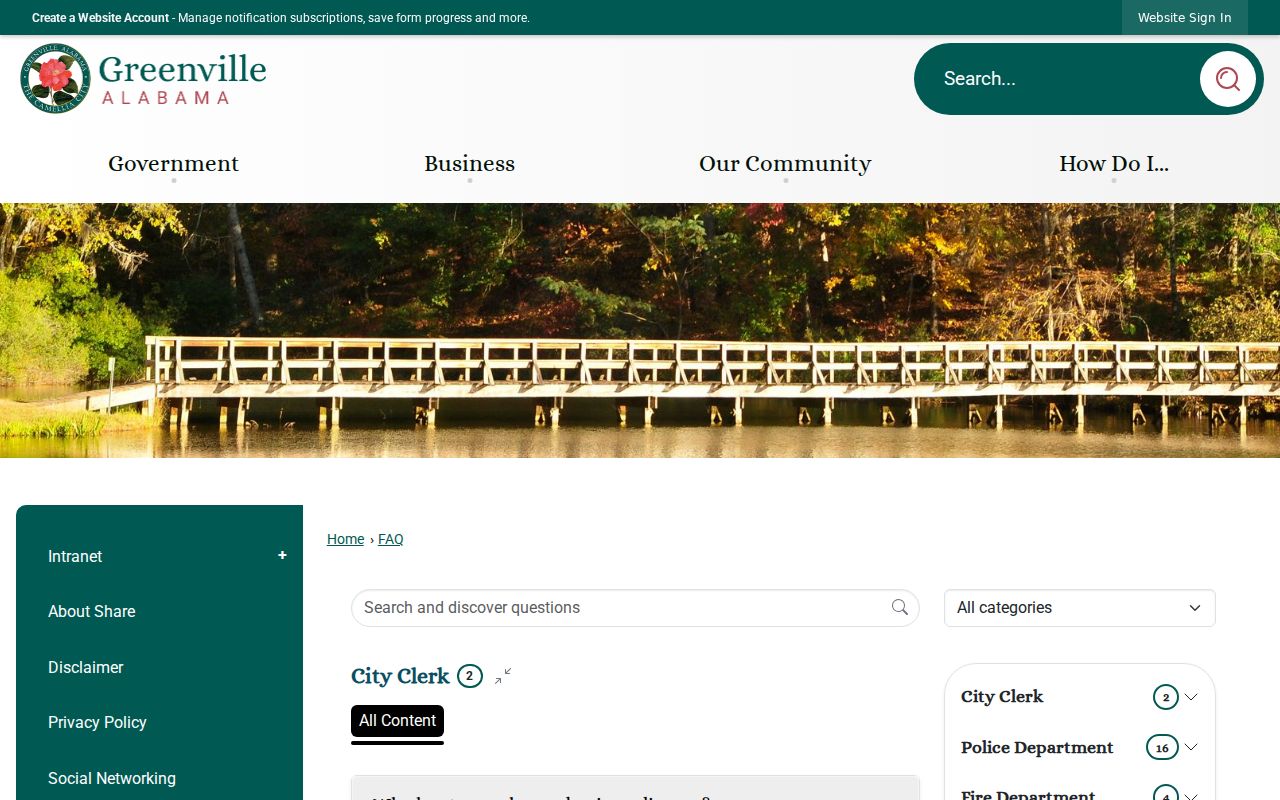
The city direction confirms the correct court route for Greenville tickets, but it offers no warrant-search fields and never promises that payment recalls a warrant. Before the printed date, some citations can be resolved by a guilty plea and payment. Others require court. Once a date is missed, ask whether a warrant issued and what the judge wants next: an appearance, a reset, bond, or another step. Butler District Court takes cashier's check or money order by mail, offers a card option with a 3 percent processing fee, and does not accept personal checks. A $25 late fee may apply, plus warrant fees if the judge orders them. Keep your receipt and ticket number. Then confirm the case and warrant status with the Clerk, because a vendor response only proves a payment went through.
What a Greenville Warrant Record Shows
No official Greenville warrant record card or status legend is published. The known case material still lets a resident ask the Clerk focused questions. Treat any verification points as things to confirm, not fields from a public city database.
| Case or ticket number | Use the number on the police report, citation, or court notice. The local warrant-number format is Not published. |
|---|---|
| Issuing court | Confirms which judge or magistrate controls the order and where later action belongs. |
| Basis | May relate to probable cause, a missed setting, or an unresolved traffic matter. |
| Service and return | An Alabama officer executes an arrest warrant and returns it to the clerk named in the warrant. |
| Status | Ask whether the process issued, was served, or was recalled. Greenville publishes no status-code list. |
| Bond or required action | No universal Greenville amount or schedule was found. Obtain case-specific instructions. |
What carries weight here is a court-confirmed status tied to the right identifier. A Greenville receipt or police report helps a warrant check along. But neither one alone proves a Greenville warrant was served or recalled.
Greenville Warrant Search Gaps
Greenville has no online warrant portal, no city court search, no status filter, no payment database, and no public roster. So work around the gap instead of paying a people-finder site. The Butler Sheriff's app is not a stand-in either. Its official page only says updates are in progress and never names a warrant module.
Key limit: A missing web result cannot prove that a Greenville warrant does not exist, especially when an unserved arrest warrant is not yet public.
The Circuit Clerk's in-person confirmation rule cuts through all this. Alabama's public-record law may open a written request route once the custodian states the required form, fees, and delivery method. That route is slower than a Greenville status check, and it serves a different purpose. Note: Rely on official Greenville and court sources, since no private search result can replace confirmation by the issuing court.
Where Greenville Warrants Fit With Butler County
Greenville is the county seat, so its city matters tie into the Butler court hub in ways Georgiana matters do not. A Greenville Police report can feed the magistrate process at the courthouse. A Greenville Police ticket lands in Butler District Court. The Sheriff may serve county court orders, while any Alabama law-enforcement officer can execute an arrest warrant under Rule 3.3. Alabama's CJIS system takes in criminal-justice information, but it runs no public statewide warrant search by name. For that bigger structure, see the Butler County warrant records overview.
Warrant flow: Greenville Police and Butler courts › Butler County Sheriff or another Alabama officer › return to the Circuit Clerk › criminal-justice agency reporting where required.
Greenville Warrant Records After Payment
Paying a ticket and resolving the case are not the same thing. A timely eligible ticket may close out through an approved guilty-plea payment. A late one may already carry a warrant, a new court duty, or a judge's order. That is why Greenville's correct payment destination still cannot answer your warrant status by itself.
- Save the vendor or clerk receipt and confirmation number.
- Call or visit the court channel to ask whether the payment posted to the correct ticket.
- Ask whether a warrant was issued and whether it has been recalled or served.
- Confirm any new date, balance, bond matter, or appearance duty still attached to the case.
If the Clerk confirms an active arrest warrant, do not guess at a walk-in surrender. Greenville publishes no voluntary-surrender procedure, no local warrant bond schedule, and no after-hours intake rule. An Alabama attorney can advise on the court action and reach the issuing office for you.
Public Access to Greenville Warrant Records
Public access turns on record status and the law guarding the file. Butler's court says an arrest warrant stays private until it is served. That local rule narrows what an ordinary Greenville record request can produce. Juvenile court and law-enforcement records are generally confidential, and youthful-offender records stay closed to public inspection unless law or a court allows otherwise.
Key Rules:
Alabama Open Records Act, § 36-12-40 gives residents a baseline right to inspect and copy public records, subject to legal exceptions.
Alabama Code § 36-12-45 permits a custodian to require its designated form, coordinator, and delivery process.
Alabama Code § 15-19-7 restricts public access to youthful-offender records.
A narrow request for your own accessible served warrant return or docket entry should name the case, court, date range, and record sought. Ask the custodian for the current request method first. Greenville keeps that step simple.
Greenville Warrant Records and Identity
A name by itself can sweep too wide. Greenville publishes no search fields, so no one can say a date of birth or case number is formally required in an online tool. Those known identifiers still help the Clerk tell files apart during the in-person process, and bring valid ID because the court expressly requires it. When a record seems to belong to the wrong person, do not chase identity fixes through email or a payment vendor. Ask the issuing court how it handles identity concerns and get legal advice when needed. The clerk can explain procedure but cannot act as counsel. Keep copies of notices, receipts, report numbers, and the names of official offices you contact. For a relative's situation, confidentiality and identification limits still apply, so the civic route is helping that person reach the correct Greenville court rather than building a private profile. An unserved warrant, a sealed matter, or a protected youth record may never come out through ordinary public channels.